
Warm socks - so your feet don't get cold
Cold feet are an unpleasant and very common problem. You’re standing at a Christmas market or taking a walk through the wintry countryside when suddenly your feet turn into blocks of ice! Fortunately, you can prevent this uncomfortable feeling by putting your feet in warm socks or winter socks. Below, we have selected various types of warm socks for you to wear at home and on the go.
Cozy socks for women and men
Those who don’t find Norwegian socks, merino wool socks, or alpaca wool socks cozy enough still don’t have to be disappointed. There are so-called cozy socks specifically for these people. At first, they may sound a little like romantic evenings for two on the couch watching romantic movies on Netflix, but these socks are also highly recommended for singles. Why should a single woman or man miss out on certain advantages? You read that correctly: cozy socks are by no means only suitable for women. Even though many men may not admit it, cozy socks have certain qualities that benefit both genders.
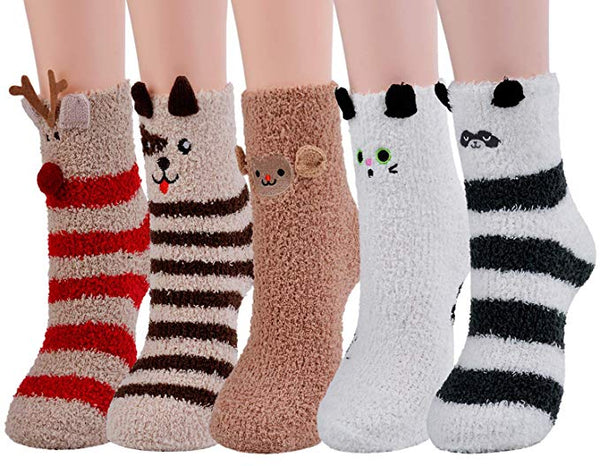
How cozy socks delight women
As the name suggests, these socks are incredibly cozy. This effect is relatively easy to achieve by using certain materials in the production of cozy socks. For example, many manufacturers use plush or terry cloth as an inner lining, turning these socks into a fluffy paradise for feet that are sensitive to the cold. Without wanting to encourage stereotypes or clichés, this feature of cozy socks is especially popular with women. These socks are perfect for cozy evenings or entire days in bed when it’s raining, stormy, or snowing outside. However, there are certainly enough men who secretly reach for cozy socks in autumn and winter.
What makes cozy socks appealing to men
In terms of functionality, the warming effect of cozy socks definitely deserves emphasis. Combined with their fluffy texture, these socks are the ideal companion for snowy winter evenings in front of the fireplace. Their warming function comes from the inclusion of wool during production. This creates an air cushion between the skin and the socks to transport moisture away and keep the feet dry. In addition, wool can absorb considerably more moisture than materials such as synthetic fibers. Specifically, this means that your feet stay warm in winter without becoming sweaty. Thanks to a certain amount of elastane, the socks are also stretchy and easy to put on and take off.
Fashionable cozy socks for women and men
For some time now, sock manufacturers have increasingly focused on stylish elements and innovative product design. Cozy socks have not been spared from this trend either. Socks cut like ballet flats but featuring the familiar fluffy lining on the inside are particularly popular. For less serious occasions, this version of cozy socks is also available with animal faces.
In addition, these cozy socks are now even available as sneaker socks. It is increasingly common to see young people wanting to show off their ankles and sneakers during the colder months as well. For precisely this situation, these short socks, optionally equipped with a fluffy terry-cloth or plush lining, are perfect. This keeps the feet warm while allowing you to show the world your newest pair of sneakers in all its glory.
Boot socks
Who doesn’t know this almost unbearable feeling: You’re wearing boots and your socks keep sliding up and down your feet. Whether winter boots, riding boots, rubber boots, or other boots - this problem is unavoidable. At least not if you wear ordinary socks. High-quality horsehair socks are made specifically to improve the comfort of wearing boots. To do this, these so-called boot socks have several special properties. This makes boot socks a popular product among children and adults. Children love jumping through puddles in their rubber boots. However, this comes with several risks.
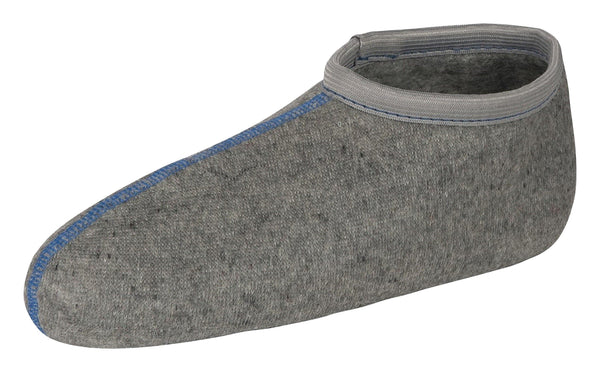
How boot socks protect children from colds
This is, exceptionally, not about the breathable properties of horsehair socks. Especially when children are outdoors away from roads and paths, their feet can quickly get wet. Sometimes even rubber boots do not provide sufficient protection against this. If you carry cold and usually dirty water around with you for an extended period, catching a cold or developing another illness is often inevitable. Thanks to their special construction, horsehair socks repel moisture. Water can still enter the shoes, but these socks form an effective protective shield around your feet. This means boot socks can protect children and adults from wet feet and any illnesses that may result from them.
How boot socks keep children’s feet warm
Horsehair socks not only keep your feet dry when your footwear fails, but also pleasantly warm. This quality is especially important to many people who wear boots. Whether on a long horseback ride, a hike, or a booted trip to the Christmas market, cold feet are always uncomfortable. Boot socks retain heat and create an air cushion around your feet. The heat released by your body is insulated there. As a result, your feet won’t get cold even after several hours outdoors in freezing temperatures. Thanks to this effect, boot socks are highly popular.
Boot socks for rubber boots and other boots
Protection from moisture and cold is all well and good. However, it is useless if the socks keep slipping and you are constantly busy fishing them out of your boots. This is a major problem, especially for children, and has already led to many tantrums followed by parental frustration. Horsehair socks are designed to fit securely around the foot and not slip even through friction with loose-fitting boots. This protects not only the nerves of people wearing boots, but also their skin. If the skin comes into contact with the rough material of the boots and rubs against it, blisters and abrasions are common. Boot socks are therefore suitable not only for rubber boots, but also for all other types of boots.
Thermal socks for cold feet
Who hasn’t experienced this: You’re at a Christmas market, drinking several glasses of hot mulled wine, and your feet suddenly feel cold anyway. Or you’re stuck at your desk for hours and suddenly can barely feel your feet because of the cold, even though you’re wearing socks. There are many situations in which thermal socks are the answer to all your problems. Okay, perhaps not all your problems. But at least the problem of cold feet. After all, what could be worse than suddenly having heavy blocks of ice instead of feet? Not much comes to mind. But why do our feet get cold so easily, and how exactly can thermal socks help?
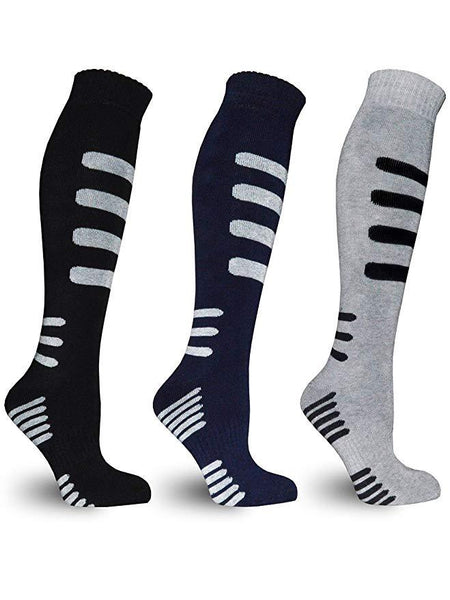
Why thermal socks protect children and adults
In principle, the following applies: Near the ground, it is naturally colder than higher up. We can wear the thickest wool sweater and the most heavily lined trousers, yet our feet are often still cold. In some cases, we may even experience the paradoxical situation of sweating “up top” while what feel like blocks of ice slowly form below. That is why underfloor heating is such a bestseller. However, anyone without the financial means for this luxury has to find another way to help themselves. Another cause of cold feet can be prolonged physical inactivity. People who spend a lot of time outdoors without moving for long periods are often affected, such as hunters or anglers. Thermal socks are useful not only in these situations, but also for everyday use.
How thermal socks warm women and men
“Thermo” comes from the Greek word “thermós” and is equivalent to the English words “warm,” “hot,” and “heated.” These warm socks certainly live up to their name. Through the use of inner linings, warming materials, or a combination of both measures, thermal socks give women and men around the world warm feet. Specifically, thermal socks create an air cushion that insulates the body heat released by the foot. The rule here is: more is better. The more air the warming cushion contains, the longer the insulating effect lasts. As a result, our feet cool down more slowly, if they get cold at all. In addition, the accumulated air ensures good circulation. This carries moisture and dampness, in this case sweat, away from the foot.
Thermal socks for men and women in every situation
Classic thermal winter socks are suitable for everyday use and can help, for example, during a long wait at a bus stop or at a Christmas market. There are also long thermal knee socks. Since they cover an even larger part of the body, they insulate not only our feet but also our shins and calves. This type of sock is suitable for people who stand outdoors without moving for long periods. However, thermal socks are not only a good idea outdoors. They also keep your feet warm at your desk or in the kitchen. Anyone who wears these socks at home regularly can easily save a few euros on heating costs.
Wool socks for women and men
Wool socks are made largely from natural fibers and contain hardly any synthetic additives. These socks offer several practical functions. Especially in winter or during long hikes, but also at home on the couch, wool socks guarantee warm feet for men and women. In fact, wool from various animals can be used to make these socks: sheep, goats, and even alpacas. Thanks to their warmth and high level of comfort, wool socks delight women, men, and children alike. That is why these socks are available in different styles and designs depending on the target group.
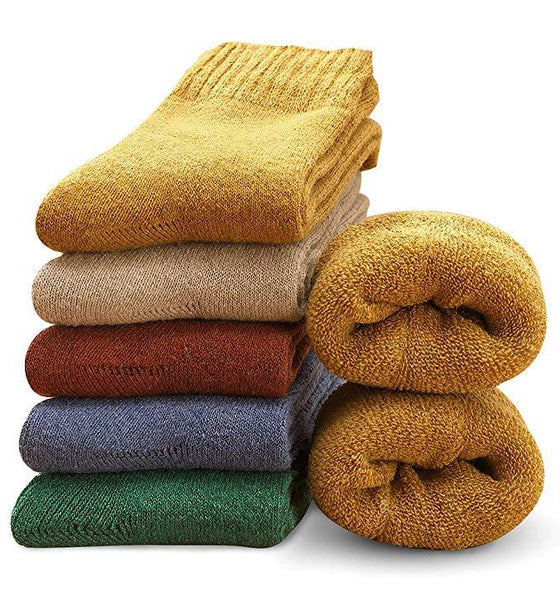
Wool socks for children
Many children like fluffy materials, as demonstrated by the universally popular cozy blanket. When it comes to socks, little ones are often particularly sensitive. If they are too tight or scratchy, the result is often tears and parental frustration. To prevent this, many parents choose soft wool socks for their children. They are not only gentle on young children’s sometimes sensitive skin, but also keep their little feet warm. This means there is no need to worry that the children will suddenly get cold and possibly even catch a cold. Wool socks without a tight elastic band also leave no pressure marks or indentations in the skin of growing children. To appeal to children’s tastes visually as well, many models feature colorful patterns or cartoon characters. Thus, baby wool socks impress not only with their fluffy comfort and cozy warmth, but also with an appealing appearance.
Merino wool socks
Many people generally avoid wool socks because they find them scratchy. These people have certainly never worn merino wool socks. Combined with viscose and cashmere, merino wool provides an incredibly soft and pleasant feel. Viscose is considered a very gentle fabric that feels almost like silk on the skin. In this case, cashmere is made from goat hair. They are therefore especially suitable for people with sensitive skin or those who find other wool socks too scratchy. Thanks to the addition of a small proportion of synthetic fiber, these socks are usually more elastic than pure wool socks. They are also generally knitted more finely and are therefore thinner. This means they fit easily into everyday shoes, such as sneakers. Nevertheless, they do not lose their warming effect, as the warm wool forms an insulating layer of air around the skin. Of course, wool socks also need to be washed, and this is where a minor disadvantage becomes apparent. They may only be gently washed in the washing machine at a maximum of 30 degrees; otherwise, they lose their elasticity and become fuzzy.
Men’s wool socks and women’s with alpaca
Alpacas have not only become popular hiking companions and can be rented for weddings; their wool also keeps your feet warm. Since the yarn obtained from it is particularly thick, this material is even warmer than sheep’s wool! However, this also makes it heavier and bulkier than most other socks, so it is not suitable for all shoes. For maximum comfort, alpaca wool should be blended with one of the particularly fine wools from merino sheep. In addition, these socks are made of 100% natural materials. Their natural composition also makes them especially breathable and good for your feet. Because they can absorb an enormous amount of moisture, they wick sweat away from the foot and keep the skin dry and warm. One disadvantage of these wool socks is that they are fairly delicate and not particularly elastic. That is why they may only be washed in the washing machine at low temperatures of up to 30 degrees; the dryer should be avoided at all costs! Alpaca wool socks are best suited to hiking in cold regions. If you wear them at home, be sure to put slippers on over them, as the socks may otherwise be damaged by the floor.